
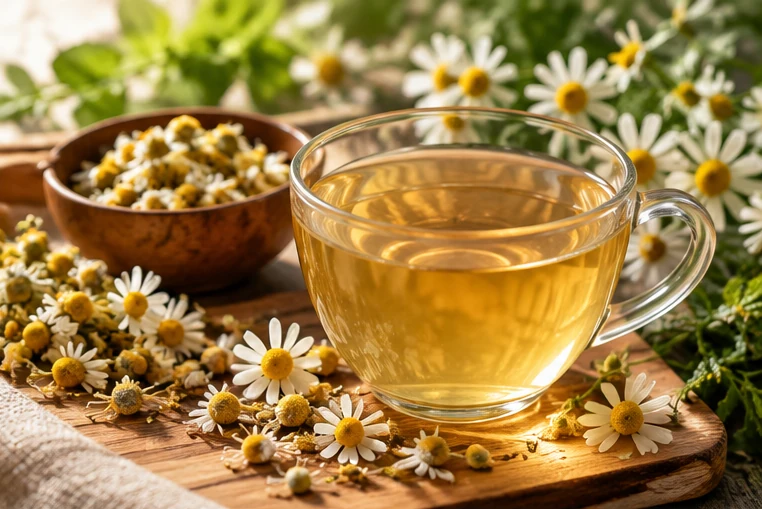
“Herbal tea” is a convenient umbrella term, not a botanical category. A cup made from flowers can differ greatly from one made from roots, seeds or roasted grains—especially when medication, allergy or caffeine avoidance matters.
Traditional practice and popular belief are reported as cultural context, not clinical proof. Studies of capsules, oils or concentrated extracts do not establish identical effects from a brewed drink. Sources below are available to check; this page has not undergone independent clinical peer review.
The plant is the point
Chamomile flowers, peppermint leaves, ginger rhizome, rooibos stems and leaves, and roasted barley can all produce infusions. Unlike true tea, most of these ingredients contain no natural caffeine when used alone. The exception is when a blend includes tea leaves, yerba mate, guayusa or other caffeinated ingredients.
A named plant species is more informative than a label such as “calm”, “detox” or “sleep”. Use the full ingredient list to distinguish a plain botanical from a blend. A product containing “jasmine” may be jasmine-scented green tea rather than an infusion of jasmine flowers.
Different forms are not interchangeable
A cup of steeped peppermint leaf is not the same as an enteric-coated peppermint oil capsule. A ginger infusion does not provide a standardised dose used in supplement trials. Concentrated botanical extracts may deliver much higher amounts of active compounds than food-style infusions.
When reading a study, look for the botanical species, plant part, preparation, dose, trial population and outcomes. Results apply first to what was actually tested.
Why herbs became everyday drinks
Across many societies, warm botanical infusions have been served after meals, in social settings or as part of a wind-down ritual. Those cultural histories deserve respectful explanation. But “used for centuries” answers a historical question rather than proving that a beverage treats a disease.
OngTeh presents tradition and modern research side by side, and does not turn historical practices into guaranteed health promises.
Naturally caffeine-free choices
Plain rooibos, chamomile, roasted barley, peppermint, lemongrass and pandan are useful flavour directions for caffeine-free routines. Barley contains gluten, a relevant distinction for people with coeliac disease. Herbal infusions may be caffeine-free but not necessarily appropriate for every medical condition or stage of life.
For evenings, a naturally caffeine-free drink can remove one avoidable source of caffeine. That alone does not establish a sleep-treatment effect.
When to exercise caution
Licorice can affect blood pressure and potassium balance. Chamomile may trigger reactions in people allergic to related plants and interact with some medications. Valerian is not a proven insomnia treatment and may interact with sedatives. Pregnancy requires extra caution with herbs, even if an infusion is labelled natural.
If you are taking medication, are pregnant or breastfeeding, or have a chronic condition, ask a qualified healthcare professional about particular ingredients before using them for symptom management.
A reliable way to choose
Read the full ingredients, check caffeine, identify the plant and avoid products that promise impossible outcomes. Prepare edible-grade ingredients according to clear directions, store them properly, and do not substitute tea for needed medical care.
The goal is a pleasant, well-informed drink—not to turn every cup into a supplement.
Questions readers ask
Are all herbal teas caffeine-free?
No. Some blends contain true tea, mate or other caffeinated plants.
Does natural mean safe?
No. Allergies, medication interactions and preparation matter.
Can an herbal tea treat insomnia?
Evidence differs by plant and preparation, and most common sleep claims are not established for brewed tea.
Sources and further reading
Public-health references supporting the major claims. OngTeh has paraphrased these sources and identified form/dose limitations.