
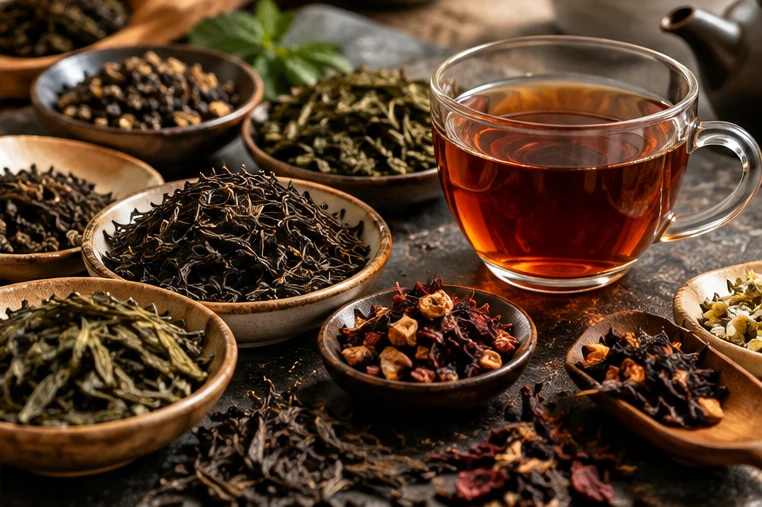
Roselle, often brewed as a tart ruby-red drink, appears in tea traditions from Africa and the Caribbean to Southeast Asia. It is sometimes promoted for blood pressure. A careful reading of the evidence is more useful than a dramatic headline.
Traditional practice and popular belief are reported as cultural context, not clinical proof. Studies of capsules, oils or concentrated extracts do not establish identical effects from a brewed drink. Sources below are available to check; this page has not undergone independent clinical peer review.
Meet hibiscus or roselle
The commonly brewed species is Hibiscus sabdariffa. Its colourful calyces infuse into an acidic, fruit-like beverage. Names include roselle, karkadé, bissap and agua de jamaica in different communities. The plain infusion does not contain caffeine from the tea plant.
Many ready-to-drink hibiscus beverages have substantial added sugar. The nutritional characteristics of the drink change with sweetening, so an unsweetened homemade cup is not the same as a packaged soft drink.
Why it is linked with blood pressure
Research has explored roselle and other plant products in people with elevated blood pressure. NCCIH describes the overall evidence for natural products in hypertension as limited, and possible effects as small. This is not equivalent to a medication recommendation or evidence that every hibiscus infusion lowers blood pressure.
Trial preparations, strength, participants and durations vary. Study results about extracts or standardised preparations should not be assumed to predict the effect of an arbitrary brewed cup.
What the evidence does not show
Hibiscus tea has not been established as a replacement for a clinician-prescribed blood pressure plan. It cannot diagnose hypertension, prevent a stroke on its own or guarantee a particular blood-pressure reading.
A person with consistently high readings should work with their care team and not delay proven care while experimenting with botanical drinks.
Medication and pregnancy precautions
If you use blood-pressure medication or have low blood pressure, discuss regular consumption with your pharmacist or clinician. Pregnancy and breastfeeding warrant additional caution because safety information for high or medicinal intakes is limited.
Avoid giving strong botanical preparations to children for a medical purpose without professional guidance.
Making a pleasant unsweetened cup
Brew correctly identified food-grade dried roselle in hot water until pleasantly tart, and let it cool before tasting. It is enjoyable hot or chilled. Add water to moderate sourness rather than assuming stronger is always better.
If you dislike unsweetened tartness, combine the infusion with plain chilled water or a slice of citrus; avoid marketing this as a detox drink.
What to take away
Hibiscus is an interesting caffeine-free infusion with a meaningful cultural story and preliminary research interest. It is not an approved treatment. Enjoy it for flavour and ritual while making individual medication and health decisions with qualified guidance.
Questions readers ask
Does roselle contain caffeine?
Plain Hibiscus sabdariffa infusion is naturally caffeine-free; mixed tea products may not be.
Can hibiscus replace blood-pressure medicine?
No.
Is stronger hibiscus tea better?
There is no proven home-brewing strength for treating blood pressure.
Sources and further reading
Public-health references supporting the major claims. OngTeh has paraphrased these sources and identified form/dose limitations.