
Evidence snapshot: NHS guidance advises no more than 200 mg caffeine daily during pregnancy and additional caution with herbal teas.
Tradition and current beliefs explain why people use a tea or herb; they are not proof of a treatment effect. Research applies only to the specific preparation and dose studied. Results from oil, capsule and extract trials must not be presented as demonstrated benefits of a brewed cup. Sources are linked for independent checking. These guides have not had external clinical peer review.
Count caffeine from every source
Green and black tea contain caffeine, as do coffee, cola, chocolate and some supplements. The NHS advises a daily limit of 200 mg of caffeine during pregnancy. This is not a target to reach, and the actual caffeine in a tea serving can vary.
People with pregnancy complications or other health concerns should follow personal guidance from their antenatal team, which may be different from general advice.
Herbal does not mean automatically safer
Many botanicals have limited pregnancy and breastfeeding safety evidence. The NHS advises not exceeding four cups of herbal tea per day during pregnancy and avoiding liquorice root tea. This is broad public guidance, not approval for every herb and brand.
Blends can include several ingredients. Reading the full list and discussing unfamiliar or concentrated herbs with your clinician is more useful than relying on a “pregnancy-friendly” label.
Chamomile, ginger and questions about symptom relief
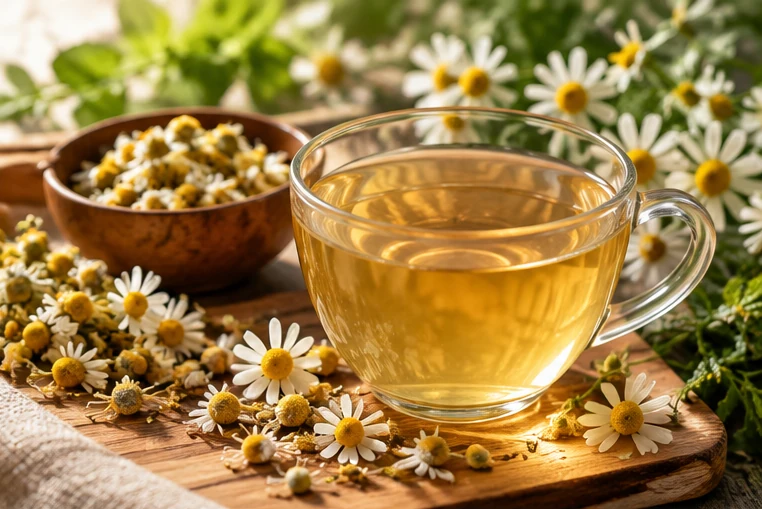
Ginger has research suggesting some benefit for pregnancy-related nausea, mostly involving preparations studied in controlled settings. It should not replace assessment of severe symptoms. Chamomile has uncertain pregnancy safety information and potential medicine interactions.
A simple warm beverage can be enjoyed for flavour, but it should not be marketed as a prenatal treatment.
When to seek timely care
Persistent vomiting, dizziness, dehydration, severe abdominal pain or concerning pregnancy symptoms need prompt clinical advice. This page is general information and cannot establish what is safe for a particular pregnancy.
Frequently asked questions
How much caffeine is advised in pregnancy?
The NHS advises not more than 200 mg per day from all sources.
Is herbal tea unlimited during pregnancy?
No. Safety differs between plants; follow professional guidance.
Can ginger tea replace nausea medication?
No. Discuss ongoing nausea and treatment with your pregnancy care provider.
Sources and further reading
Primary public-health sources for the main claims above. Research on an extract or supplement is not automatically evidence for a brewed beverage.