
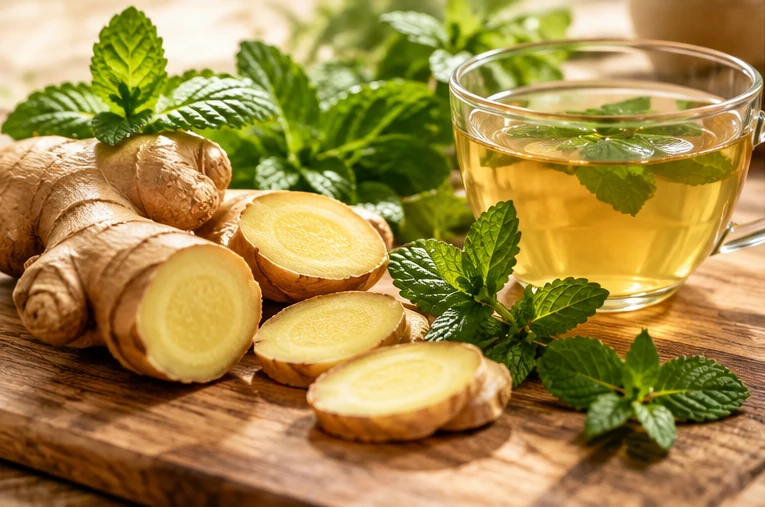
Evidence snapshot: ginger has research for some forms of nausea; peppermint-oil capsule studies do not establish the same effect for mint tea.
Tradition and current beliefs explain why people use a tea or herb; they are not proof of a treatment effect. Research applies only to the specific preparation and dose studied. Results from oil, capsule and extract trials must not be presented as demonstrated benefits of a brewed cup. Sources are linked for independent checking. These guides have not had external clinical peer review.
First, define the discomfort
Nausea, gas, bloating, heartburn and abdominal pain are not interchangeable problems. One botanical cannot reasonably be assumed to help all of them. An occasional soothing hot drink may feel pleasant, but frequent or intense symptoms require a different level of attention.
A sensible tea guide starts by asking whether the concern is mild nausea, reflux after meals or recurring bowel symptoms, then offers ingredient facts rather than a diagnosis.
Ginger for nausea: the strongest lead, with limits
Ginger has been studied most often in supplement form. NCCIH reports evidence that it may help nausea and vomiting associated with pregnancy. That does not prove a homemade ginger infusion at an unknown strength has the same effect as the products tested.
For a food-style drink, thin slices of culinary ginger infused in hot water can offer a warming taste. It may also cause heartburn, abdominal discomfort or diarrhea in some people. Persistent vomiting or dehydration needs medical care.
Peppermint may not suit reflux
Peppermint has a reputation as a post-meal drink. Enteric-coated peppermint-oil capsules have some evidence for short-term relief of certain irritable bowel syndrome symptoms, but studies of concentrated capsules are not studies of peppermint tea.
Peppermint oil can aggravate heartburn and reflux, and some people find peppermint drinks uncomfortable too. If mint consistently worsens symptoms, do not force it on the assumption that “natural” means calming.
Build better post-meal expectations
Choose unsweetened drinks where possible, avoid very hot beverages, and consider the role of meal size, food triggers and eating schedule in discomfort. No cup should delay evaluation of bleeding, severe pain, unintentional weight loss or persistent symptoms.
A good tea ritual is one that is enjoyable, tolerable and does not replace a necessary diagnosis or treatment.
Frequently asked questions
Does peppermint tea treat IBS?
Evidence mainly concerns enteric-coated peppermint oil capsules, not ordinary brewed tea.
Can ginger tea stop nausea?
Some research supports ginger preparations for certain kinds of nausea; the strength and effect of home-brewed tea are not established.
Which tea is best for acid reflux?
No tea is a proven reflux treatment. Mint and strongly caffeinated tea may be poor choices for some people.
Sources and further reading
Primary public-health sources for the main claims above. Research on an extract or supplement is not automatically evidence for a brewed beverage.