
Evidence snapshot: there is not enough high-quality evidence that ordinary herbal teas treat anxiety disorders.
Tradition and current beliefs explain why people use a tea or herb; they are not proof of a treatment effect. Research applies only to the specific preparation and dose studied. Results from oil, capsule and extract trials must not be presented as demonstrated benefits of a brewed cup. Sources are linked for independent checking. These guides have not had external clinical peer review.
What relaxation means here
Stress can mean a demanding day, an uncomfortable feeling or a medical concern. OngTeh uses “relaxing” to describe a personal, low-pressure routine: making a warm drink, pausing notifications, sitting down and paying attention to taste.
That is different from claiming a botanical infusion treats anxiety. A responsible site should never suggest replacing therapy, medicines or other evidence-based care with a cup of tea.
Choose caffeine intentionally
Caffeine can cause jitteriness and anxiety symptoms in some people, particularly at higher amounts. Someone wanting a quieter evening may prefer a plain caffeine-free botanical drink instead of strong black tea or matcha.
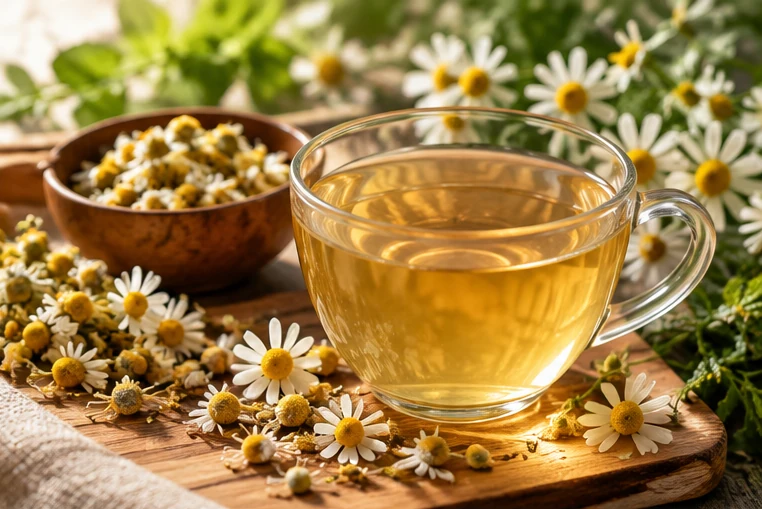
Chamomile is culturally associated with calm and sleep, but NCCIH says the evidence for its clinical use remains limited. It can be enjoyed for flavour without attributing a guaranteed physiological result.
A five-minute pause
Heat water safely, choose one tea or infusion you enjoy, and notice its aroma. Sit comfortably while it cools, slow your pace, and set a clear end to the pause before returning to other tasks. This is a ritual suggestion, not a treatment protocol.
A repeatable habit is often easier to keep than an elaborate wellness routine requiring expensive ingredients.
Recognising when tea is not enough
If anxiety, panic symptoms or low mood significantly affect daily life, seek appropriate professional support. Herbal products may interact with medicines, and people with allergies or during pregnancy need additional caution.
Frequently asked questions
What tea cures stress?
No ordinary tea is established as a cure for stress or anxiety.
Is matcha relaxing?
Matcha contains caffeine, which some people may find stimulating.
Can I make this ritual with warm water?
Yes. The habit of pausing does not require a special ingredient.
Sources and further reading
Primary public-health sources for the main claims above. Research on an extract or supplement is not automatically evidence for a brewed beverage.