
Evidence snapshot: some benefit for pregnancy-related nausea in studies, mainly of supplements, not a validated dose of homemade tea.
Tradition and current beliefs explain why people use a tea or herb; they are not proof of a treatment effect. Research applies only to the specific preparation and dose studied. Results from oil, capsule and extract trials must not be presented as demonstrated benefits of a brewed cup. Sources are linked for independent checking. These guides have not had external clinical peer review.
Why ginger appears in digestive conversations
Ginger has a sharp, warming profile used in many food traditions. Researchers have tested ginger preparations for several types of nausea, including pregnancy, surgery and chemotherapy-related symptoms, with different findings for each context.
The NCCIH summary reports that ginger may help pregnancy-related nausea and vomiting; for several other causes, the results are less certain. An ordinary infusion does not have a standardised concentration comparable to a research product.
A practical way to brew a culinary cup
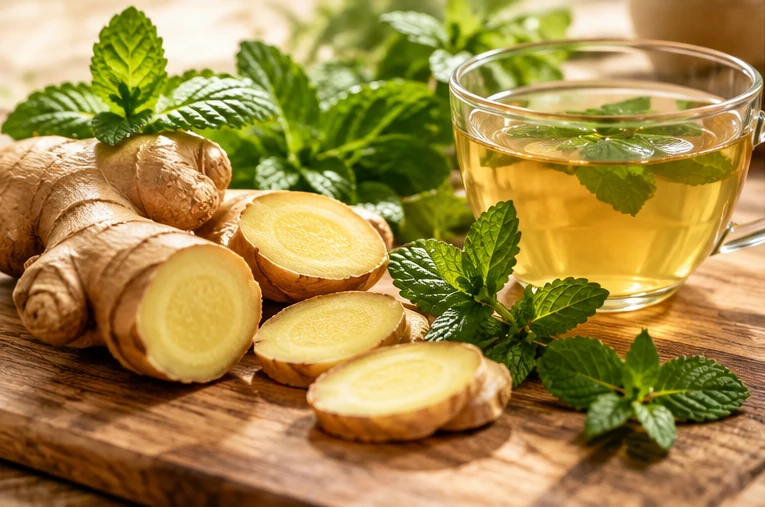
Wash the root, slice a small amount thinly and steep it in hot water according to taste. Start mild. Honey or sugar are optional flavour additions, not required for an unsweetened drink. Prepared ginger tea mixes may contain caffeine or substantial added sugar; read labels.
Do not treat stronger, hotter or longer as inherently healthier. The aim is a palatable drink, not a medicinal extraction.
When ginger can be the wrong choice
Ginger can cause heartburn, diarrhea and stomach discomfort. People taking medications should check with their clinician or pharmacist before using concentrated products. Those who are pregnant should discuss symptom management and supplement use with their own pregnancy care team.
Severe or persistent vomiting, inability to keep fluids down, blood in vomit and signs of dehydration merit timely medical assessment. A tea guide cannot determine the cause.
A useful buying checklist
Look for ginger content, other botanicals, added sweeteners and whether the blend includes conventional tea leaves. “Ginger green tea” is not caffeine-free; plain ginger infusion generally is.
Frequently asked questions
Is ginger a caffeine-free drink?
Plain ginger infused in water is naturally caffeine-free. Mixed teas require label checks.
Is ginger proven to prevent motion sickness?
Most studies described by NCCIH have not found a clear benefit for motion sickness.
Does tea work like ginger capsules?
Not necessarily; dose, processing and preparation differ.
Sources and further reading
Primary public-health sources for the main claims above. Research on an extract or supplement is not automatically evidence for a brewed beverage.