
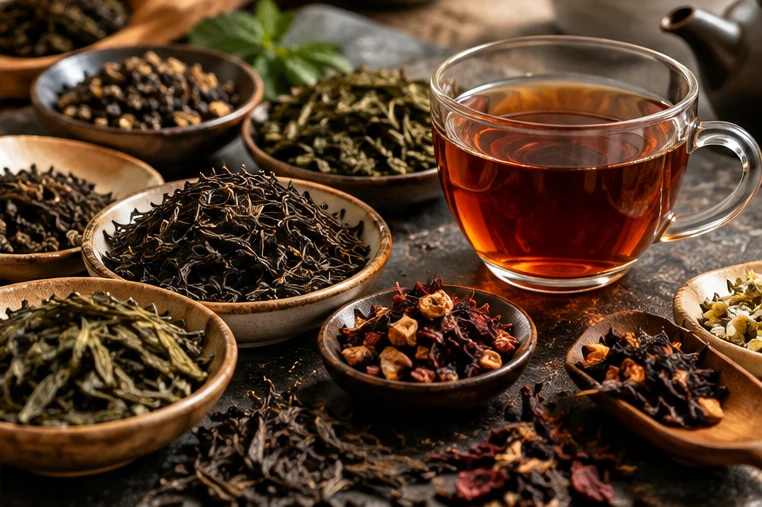
Evidence snapshot: a naturally caffeine-free botanical infusion; not an established treatment for specific medical conditions.
Tradition and current beliefs explain why people use a tea or herb; they are not proof of a treatment effect. Research applies only to the specific preparation and dose studied. Results from oil, capsule and extract trials must not be presented as demonstrated benefits of a brewed cup. Sources are linked for independent checking. These guides have not had external clinical peer review.
Meet rooibos
Rooibos is a plant-based infusion associated with South Africa. It is distinct from Camellia sinensis and does not contain tea-plant caffeine. Its woody, naturally sweet-seeming flavour makes it a flexible hot or iced drink.
A plain rooibos cup can be an appealing replacement for late black tea if caffeine is the concern, while still providing a satisfying flavour.
The health-claim boundary
Antioxidant compounds appear in many plants, including rooibos, but the presence of an interesting chemical does not mean drinking the infusion prevents cancer, controls blood pressure or “detoxifies” the body.
A good label gives people truthful information about ingredients and caffeine rather than inventing a medical effect.
Brewing and serving
Use food-grade rooibos and follow the product’s steeping instructions. Try it plain before adding sweetener. It can be served hot, cooled over ice, or paired with culinary orange peel or spices for aroma.
For a blended rooibos product, read the full ingredient list: a rooibos-and-black-tea blend will no longer be naturally caffeine-free.
Who should check ingredients
Single-ingredient rooibos is relatively straightforward, but individual allergies, medical situations and multi-herb combinations still warrant caution. Pregnancy and medication questions should be discussed with a qualified health professional rather than resolved by a general website.
Frequently asked questions
Is plain rooibos caffeine-free?
Yes, plain rooibos is naturally caffeine-free.
Can rooibos cure insomnia?
There is no established evidence that it treats insomnia.
Is rooibos a true tea?
Technically it is a botanical infusion rather than tea from Camellia sinensis.
Sources and further reading
Primary public-health sources for the main claims above. Research on an extract or supplement is not automatically evidence for a brewed beverage.